Table Of Content

If you spend most of your long drives in an RV, you can rest easy knowing that some RVs also come with adaptive cruise control. You are not recommended to use cruise control when driving up and down hills that incline sharply or change perpetually, such as highways that pass across rolling hills. However, this does not mean that you use this car system everywhere and every time; use of cruise control is only limited to certain conditions.
Is adaptive cruise control safe?
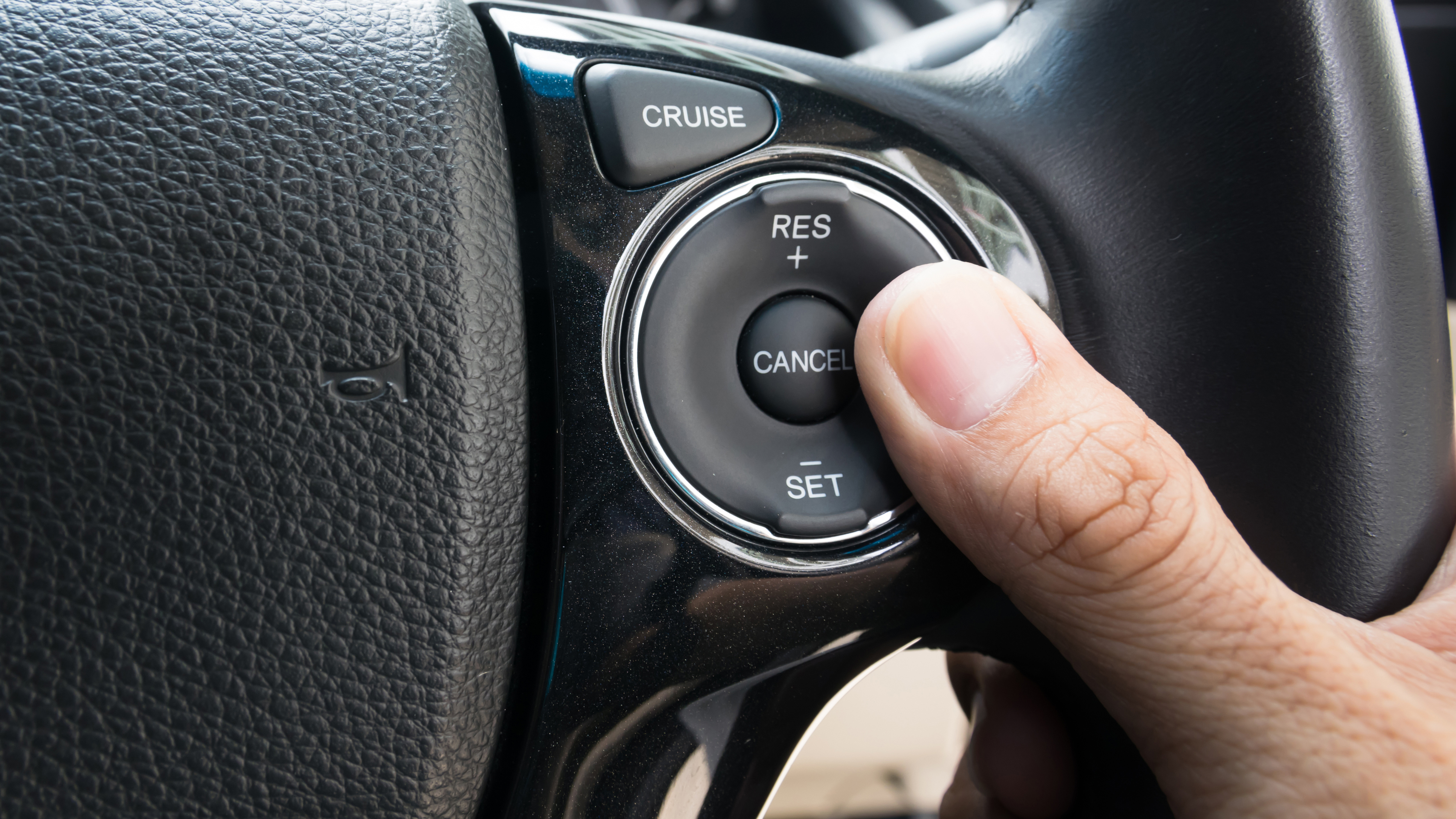
When your tires are underinflated, they create more rolling resistance, making the engine work harder and consume more fuel. On the other hand, overinflated tires can lead to decreased traction and uneven wear. Cruise control is a popular feature in many vehicles, but there are several misconceptions surrounding its impact on fuel efficiency. While most new cars come with cruise control, older models might not have this feature. Even if you can install it, it might not work as efficiently as in newer cars. Also, the installation can be expensive, and there’s a risk of damaging the vehicle if not done correctly.
Can cruise control ruin your transmission?
It has to do with the power output from the engine and the RPM level that you tend to drive at. It will keep your car going at the same rev per minute (RPM) range without you having to keep your foot on the gas pedal. So, it’s a convenient feature for keeping optimal speed, and for improving fuel economy on top of it. Still, there’s much more about cruise control and gas mileage than meets the eye, and our team set out to explore.
Factors Affecting Fuel Efficiency
No, filling up your car on a specific day of the week is not a reliable way to save money on gasoline VERIFY - VERIFYThis.com
No, filling up your car on a specific day of the week is not a reliable way to save money on gasoline VERIFY.
Posted: Wed, 14 Feb 2024 08:00:00 GMT [source]
Just ensure you’ve done thorough checks on your RV before hitting the road, so you can give your cruise setting the best setup for success. For example, the feature is only fuel-efficient if used on flat roads or mostly level highways that do not have any traffic congestion. Besides the level roads, cruise control can also be used on steady uphills or downhill drives. Yes, the type of vehicle can impact the fuel savings achieved through cruise control. Generally, vehicles with smaller engines or those optimized for fuel efficiency may experience more noticeable fuel savings when using cruise control. Larger, less aerodynamic vehicles or those with higher horsepower engines may have fewer fuel-saving benefits due to their inherent design and power requirements.
Since fuel consumption is greatest during acceleration, it stands to reason that the best way of achieving peak fuel economy would be to maintain a set speed. This can be quite difficult to achieve by way of standard pedal application. However, maintaining a set speed is easily achieved through the use of cruise control. Using cruise control on shorter journeys can help maintain a consistent speed, minimizing speed variations caused by human error.
Tesla Cybertruck Recall: Unintended Acceleration
The environmental impact of improved fuel efficiency extends to reduced greenhouse gas emissions. While they don’t use gas, maintaining an even pace optimizes their energy use, thus extending the range. On hilly terrain, we must understand that our vehicle’s cruise control may cause more fuel to be consumed when attempting to maintain a constant speed uphill. Cruise control is a useful system in an automobile, but it should not be substituted for a self-driving system. Since cruise control maintains a certain speed, it eliminates the need for sudden acceleration, which eliminates the need to consume more gas.
Using cruise control can mean burning more fuel
Conventional cruise control uses its computer to maintain a speed determined and manually set by the driver with no awareness of or regard for surrounding traffic and conditions. Capable of responding to topographical changes, like going up and down hills, the computer increases throttle pressure or engages the engine brake to maintain the preset speed. Cruise control contributes to sustainable driving habits by promoting fuel efficiency. By maintaining a steady speed, the system optimizes fuel consumption, reducing the overall carbon footprint of the vehicle.
In this section, we uncover the nuances of advanced cruise control systems, focusing on how adaptive cruise control enhances safety and optimizes fuel efficiency. Cruise controls help maintain a certain speed, save fuel, and increase fuel economy. It allows the driver to rest during long-distance travels and thus makes the driver more comfortable. Shooting the car from a low speed to a higher speed requires the car’s engine to generate the maximum torque required. Since more torque means the engine works harder and spins faster, which will require a higher amount of gas. Maintaining a steady speed needs minimal torque, spin, and amount of gas.
However, it doesn’t eliminate the need for you to be alert and ready to take control at any moment. Like any tech, it might have occasional glitches, so always keep your eyes on the road. Adaptive Cruise Control brings a new level of safety and convenience to driving. It can help prevent collisions by maintaining a safe following distance, reducing the stress of driving in heavy traffic. It also allows you to relax more without worrying about adjusting your speed frequently.
He too wondered if cruise control saves gas but found it difficult to get an accurate analysis. Additionally, cruise control can reduce driver fatigue on both long and short trips. By allowing the driver to relax their foot and focus more on the road ahead, it can contribute to a safer driving experience.
When you switch on the cruise control system, a light will appear on your dashboard to show that the system is switched on. Knowing how often to change your tires is critical to staying safe on the road. Adaptive cruise control was invented in 1990 by William Chundrlik and Pamela Labuhn. In fact, the Natural Resources Canada conducted a study on the effects of using cruise control compared to not using it. This is particularly helpful when driving long distances, especially on long freeways.
You can’t properly regulate the situational changes when you activate cruise. Cruise control in the rain is another situation where the driver should have complete control. Adaptive Cruise Control is the newest form of cruise control in vehicles today. ACC works by adjusting the speed of your car to the flow of traffic as you drive. ACC systems can sense road speed, but they also can register the presence of other vehicles. While it’s generally true that cruise control can improve fuel economy across long, flat stretches of road, there are no hard and fast rules.

The use of cruise control is not advised when driving in slippery conditions, such as those presented by rain or snow. This is due to the fact that road conditions can change in an instant when driving in these less than ideal conditions, thereby making it essential to drive in response to the situation at hand. A good system will not deviate the speed of the car too much during an uphill climb and it won’t overshoot the power it needs to maintain the speed necessary, either. On a recent drive from Detroit to New York, Sinclair said he once again pondered whether cruise control saves gas. Sinclair said that consumers have long complained of vehicles falling short of the amount of money that they were supposed to save on fuel economy due to cruise control. Simply put, traditional Cruise Control is a system that helps you maintain a constant speed.
VERIFY viewer Tracy reached out from the road to ask if cruise control can also help you save money on gas. Driving through wet roads at high speeds can cause your car to lose traction and hydroplane as your tires will rotate too fast to grip the roads properly. This is exacerbated by cruise control, which can require you to use your brakes to regain control of the vehicle. For instance, ACC slows your vehicle when the person in front of you slows down.
As such, your car isn’t slightly accelerating or decelerating as it would be in normal driving conditions. Cruise control comes with several advantages that make driving not just easier but also safer and more efficient. The first rudimentary versions of cruise control appeared in the late 19th century, but the modern version was invented in the 1940s by Ralph Teetor, a blind mechanical engineer.


No comments:
Post a Comment